
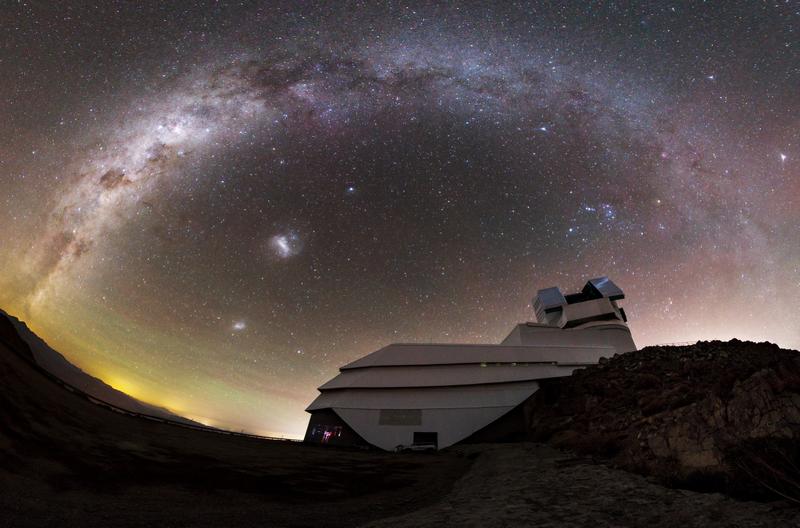
On Wednesday 30th September, we’re delighted to be joined by Dr Meg Schwamb of Queen’s University Belfast for a talk on Unveiling the Solar System in the Rubin Observatory Era.
Reserve your seat using: https://www.ticketsource.com/bath-astronomers/t-mjekkpo
High in the Chilean Andes is the Vera C. Rubin Observatory, a next-generation facility named after Vera Rubin, a pioneering astronomer whose work provided key evidence for dark matter. Rubin Observatory houses the world’s largest digital camera (3.2-gigapixel) capable of covering ~45 times of the size of the full Moon in a single image. With the ability to scan the visible night sky approximately once every three nights, this international facility is going make the largest “movie” of the changing night sky.
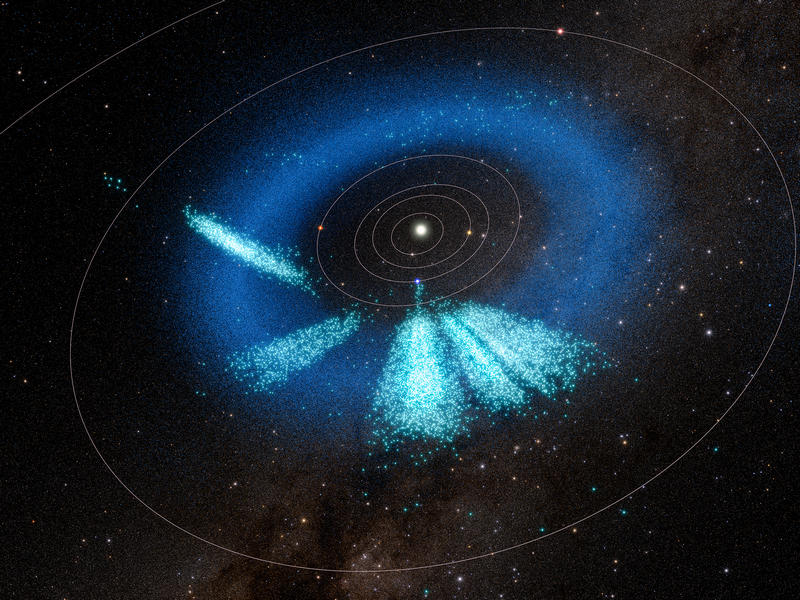
Rubin Observatory just began its 10-year mission to “download the sky” and make the most comprehensive census of objects in the Universe to-date. In this talk, Meg will present this new observatory, its capabilities, and how it is going to completely change our view of the Solar System from finding “killer asteroids”, interstellar visitors, and distant small worlds (and maybe even a planet) beyond Neptune.
About Dr Meg Schwamb

Meg Schwamb is a Reader Astrophysics Research Centre (ARC) and the School of Mathematics and Physics at Queen’s University Belfast (QUB) in the UK. She is interested in the fundamental questions of how our Solar System and others formed and evolved as well as exploring the process of planet formation. Her expertise is in big data for planetary astronomy, focusing in particular on studying the small body populations in the Solar System, exploring seasonal processes on Mars, exoplanet detection.